
US Senator John Curtis' Story of Faith & Forgiveness
What does a United States Senator say when asked why he believes? For John Curtis, it starts on a mountaintop in Galilee, where at 19 he went 48 hours without food or water and climbed alone to ask if God would forgive him. He walked down certain the answer was yes, and the first to say he would not recommend the method.
In this episode of Why We Believe, host Nathan Gwilliam sits down with Senator John Curtis of Utah, a direct descendant of Brigham Young and former mayor of Provo. Curtis shares the story of a great-great-grandmother who chose the gospel over her oldest son, a family legacy where all eight sons served as mission presidents, and how a 30-year-old bishop in Richmond, Virginia learned that constant inspiration is the only way to lead beyond your experience. He talks about serving a mission in Taiwan, returning decades later to sit with Taiwan's president as a senator, and why a pattern from those early mission days has guided every chapter since.
Loved this episode? Hit Follow and share it with someone who has wondered if their road back to faith is still open. Leave a review for Why We Believe on Apple Podcasts, Spotify, or YouTube. Your support helps us bring more inspiring conversations like this to listeners everywhere!
Follow the Why We Believe Show: Website: WhyWeBelieve.com | YouTube: @WhyWeBelieveShow | LinkedIn: @Why-We-Believe-Show | Instagram: @WhyWeBelievePodcast
Follow Nathan Gwilliam: LinkedIn: @NathanGwilliam
Follow Senator John Curtis: Website: curtis.senate.gov | YouTube: @SenatorJohnCurtis | Twitter/X: @SenJohnCurtis | Instagram: @SenJohnCurtis | Facebook: SenJohnCurtis | LinkedIn: @JohnRCurtis
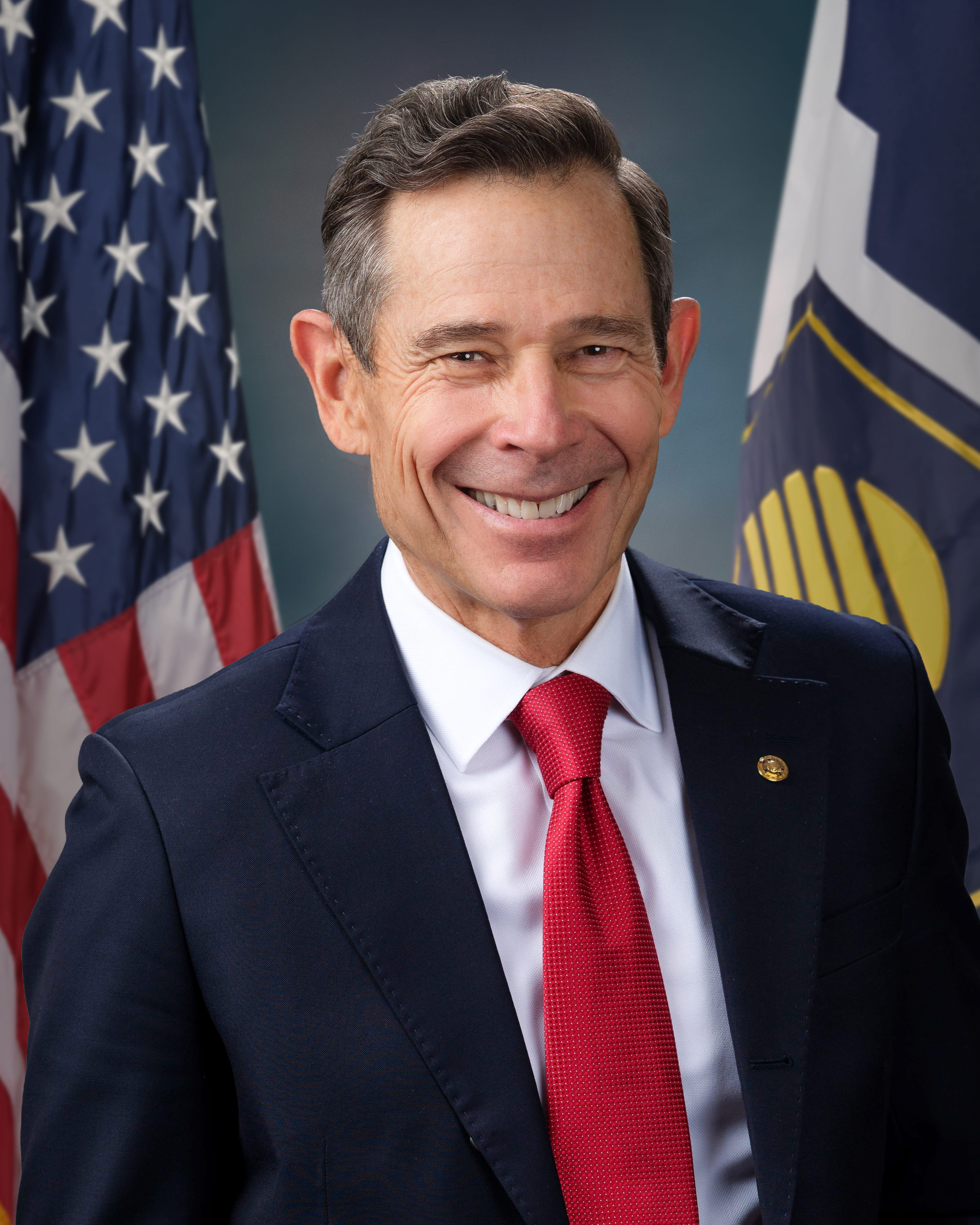
He Fasted 48 Hours on a Galilean Mountain to Know God Had Forgiven Him
Picture a 19-year-old standing alone on a mountain in Galilee. He has not eaten or had water in two days. He went 48 hours without food or water on purpose because his teenage logic said that if 24 hours of fasting was good, 48 hours must be better. He climbed that mountain with one question burning in his chest: can God forgive me?
He was on a BYU semester abroad in Israel. He had grown up in The Church of Jesus Christ of Latter-day Saints, attended seminary, and done all the expected things. But he had not yet settled the most personal question. At the end of that second day, somewhere in the Galilee area, he found a mountain and climbed it alone. He asked. And he walked down with no doubt in his mind.
That 19-year-old is now a United States Senator. John Curtis represents Utah in the Senate, holds the seat once occupied by Mitt Romney, and says openly that it is impossible to separate his faith from anything he does. In a conversation on the Why We Believe podcast with host Nathan Gwilliam, he traced a faith shaped by sacrifice in Scotland, a mission in Taiwan, a calling as bishop in Virginia, and a lifetime of watching the Lord place him exactly where he needed to be.
The Ancestor Who Left Her Son on a Ship
The Curtis story starts in the coal mines of Scotland. Senator Curtis's great-great-grandfather worked long, hard days and would stop at the pub on the way home, spending what little money he had. The home was abusive. His great-great-grandmother found the missionaries and joined the church. Her husband told her to leave.
She did not hesitate. She gathered three of her children and boarded a ship to America, sponsored by a family named Curtis, whose name they would eventually take as their own. But as the ship prepared to sail, her husband changed his mind. He came aboard, grabbed the oldest son, and looked her in the eye. If she left, he told her, she would never see that boy again.
She left. The oldest son died in the Boer War. Her remaining children arrived in America and multiplied in ways she could not have imagined. Her son Alex had ten children. All eight sons and the husbands of both daughters served as mission presidents in the church. One son served as the Salt Lake City Temple President. Another served in the Second Quorum of the Seventy. And somewhere down that line, a descendant would walk onto the floor of the United States Senate. That decision sent ripples he is still tracing today.
A Mountaintop in Galilee and 48 Hours Without Food
Before any of that, John Curtis was a 19-year-old who had never heard of Taiwan. He opened his mission call in the Garden Tomb in Jerusalem while on a BYU semester abroad. His call said Taichung, Taiwan. Taichung sounded a lot like Tijuana. When his friend said he was going to Spain, Curtis told him they must be learning the same language. That is how little he understood about the world he was walking into.
The BYU programs in those years gave students long stretches of independent time to explore the Holy Land and read. Curtis used that time to work through something personal. He had grown up with a testimony of the Book of Mormon, but he had not settled the question of forgiveness. Nothing grievous weighed on him. Just the ordinary weight of being 19. He needed to know if the Atonement actually worked and whether it applied to him.
His solution was sincere and literal. If 24 hours of fasting was good, 48 must be better. He went two days without food or water, found a mountain in the Galilee area, and climbed it alone. He asked. He walked down with no doubt left in him. As he said himself, he would not recommend the method. But the Lord met a sincere 19-year-old on that mountain, and that was enough. He left for Taiwan weeks later not as a missionary still searching for that witness, but as one who already had it.
Taiwan, Humility, and a Pattern That Never Left
The MTC in 1979 ran on headphones and memorization. For eight weeks, Curtis sat in a room with other missionaries, memorizing the romanization of Mandarin sounds, page after page for hours at a time. He estimated roughly 100 pages of sounds he had never heard before. He was not a strong student, but the words stuck. When he landed in Taiwan and greeted a customs officer with a simple ni hao, she could not understand him. The tones were wrong. The accent was off. All those memorized sounds still had to become something real.
Two months into his mission, his mission president paired him with a new missionary fresh from the MTC. Between the two of them, they had about two months of experience. They knocked on doors. If someone let them in, they taught a memorized discussion that was probably about as comprehensible as that first ni hao. If the door closed, they moved on. Day after day. Curtis was leading before he felt ready, carrying a companion who knew less than he did, in a language he was still learning.
But a pattern emerged. The moment everything seemed to be falling apart, the moment investigators disappeared, and nothing was working, that was the cusp of something great. He has watched that pattern repeat in every chapter since. In business, in the mayor's office, and in Washington. The lowest point, he believes, tends to arrive just before something opens.
A Bishop at 30, a Mayor at 94%, and Faith in the Senate
When John Curtis was called as bishop in Richmond, Virginia, at age 30, he led that ward for five years and describes it as one of the most blessed seasons of his life. His family was young. His career was demanding. Yet things worked in ways they rarely had before or since. The only explanation he offers is near-constant inspiration. You cannot lead people you are not yet qualified to lead without it.
He brought the same approach to the mayor's office in Provo. An open-door policy, genuine listening, and real curiosity about what people need produced a 94% approval rating. The 6% who disapproved still bothers him, he admits. But the approach was the same as what he learned in the Tuckahoe and Gayton Ward: treat people the way the gospel teaches you to treat people.
Washington is harder. He attends church knowing roughly half the room disagrees with his politics, and his presence can make people uncomfortable in ways that grieve him. But the opportunities are unlike anything else. He has sat with the president of Taiwan, where he served his mission in 1979. He has spoken with kings and rulers about religious freedom and the status of the church in their countries. In one meeting as the most junior member of the delegation, he was seated next to a foreign president and attorney general and spent an hour and a half addressing a law that made it difficult for the church to operate in that country. He does not think that seating arrangement was a coincidence.
Key Takeaways
God answers the question of personal forgiveness when we sincerely seek it, often more quickly and directly than we expect.
Humility in a role that exceeds our experience opens a channel of inspiration that carries both the leader and those they serve.
Ancestors who sacrificed to embrace the gospel can establish a spiritual momentum that outlasts their lives by generations.
Faith applied to public service produces the same fruit it produces anywhere else: trust, genuine connection, and durable influence.
Looking for the testimony of Christ in ordinary things, seasons, and relationships can sustain belief across decades.
Senator Curtis closes with his favorite scripture from Moses: all things bear record of Him. He reads it as all things testify of Jesus Christ. In the spring, trees returning to life. In the eyes of his 19 grandchildren. In the temple. In his prayers. In every room where the Lord has placed him, often the last room anyone would have expected.
He had questions at 19 and sought answers the direct way. He found them on a mountain in Galilee. That has been enough ever since. If you have questions of your own right now, this episode of Why We Believe is for you.
Thank you for reading. For more stories like this, visit WhyWeBelieve.com.
Follow the Why We Believe Show: Website: WhyWeBelieve.com | YouTube: @WhyWeBelieveShow | LinkedIn: @Why-We-Believe-Show | Instagram: @WhyWeBelievePodcast
Follow Nathan Gwilliam: LinkedIn: @NathanGwilliam
Follow Senator John Curtis: Website: curtis.senate.gov | YouTube: @SenatorJohnCurtis | Twitter/X: @SenJohnCurtis | Instagram: @SenJohnCurtis | Facebook: SenJohnCurtis | LinkedIn: @JohnRCurtis