
Zions Bank Former CEO Scott Anderson: Bringing Faith in Business and Beyond
Scott Anderson's family has been building Utah since 1847, when three of his ancestors walked into the Salt Lake Valley beside Brigham Young. Their homestead site sits beneath Zions Bank Tower today. Scott went on to run that same bank for 25 years as president and CEO, growing it from $3.2 billion to nearly $100 billion in assets while steering it through 9/11, the 2008 financial crisis, and the Silicon Valley Bank panic of 2023. He chaired the American Bankers Association, served on more than 90 nonprofit boards, and has been called Utah's unelected governor. None of that is how he would describe his career. He would describe it as a lifelong attempt to answer the question the Pharaoh once asked about Joseph of Egypt: where can we find a man in whom the spirit of God is?
In this episode of Why We Believe, host Nathan Gwilliam sits down with Scott to trace the faith that has run through his family for generations. Scott shares how the Polynesian people of Tahiti taught him what simple faith actually looks like during his mission there, and how studying philosophy at Columbia left his testimony stronger rather than shakier. He walks through the parable of building on a rock as his operating manual through every crisis Zions Bank ever faced. And he tells the story of a seventeen-year-old pony express rider, his own ancestor, lost in a Sierra Nevada blizzard at midnight and about to give up, until a voice told him to circle a tree and sing until sunrise. He did. He survived. Scott Anderson has been listening for that same voice ever since.
Loved this episode?Hit Follow and share it with someone who needs to hear that the same faith that carried a family through a blizzard can carry them through anything. Leave a review for Why We Believe on Apple Podcasts, Spotify, or YouTube. Your support helps us bring more inspiring conversations like this to listeners everywhere!
Visit WhyWeBelieve.com to download Your FREE guide on 13 Strategies to Increase Faith in Jesus Christ, to support you as you strengthen your own testimony of Jesus Christ. Follow the Why We Believe Show - Website: WhyWeBelieve.com | YouTube: @WhyWeBelieveShow | LinkedIn: @Why-We-Believe-Show | Instagram: @WhyWeBelievePodcast Follow Nathan Gwilliam - LinkedIn: @NathanGwilliam
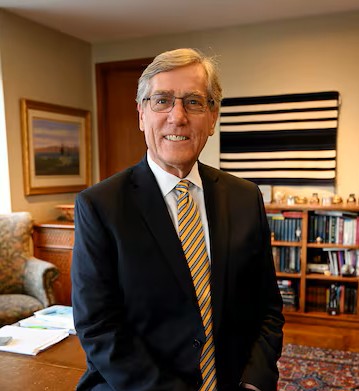
He Ran a $100B Bank on Faith. His Ancestor Survived a Blizzard the Same Way.
It was midnight somewhere in the Sierra Nevada mountains. He was seventeen years old, a pony express rider, and he was lost. The blizzard had taken everything: the trail, the sky, any sense of direction. He was cold enough to die and he knew it. He had almost decided to get off his horse and lie down in the snow when a voice told him not to.
The voice said to hold his horse's tail with one hand and the bridle with the other, walk around a tree, and sing until sunrise. He did exactly that. The whole night, circling a tree in the dark, singing. When the sun came up and the storm cleared, he was alive. He got back on his horse and delivered the mail.
That boy was Scott Anderson's great-great-grandfather. The homestead his family eventually built in Salt Lake City sits beneath Zions Bank Tower today. Scott Anderson would go on to run that same bank for 25 years as president and CEO, growing it from $3.2 billion to nearly $100 billion in assets while steering it through 9/11, the 2008 financial crisis, and the Silicon Valley Bank panic of 2023. In a recent episode of Why We Believe, host Nathan Gwilliam sits down with Scott to trace the faith that produced both stories.
Roots That Run Deeper Than the Bank
Scott Anderson grew up in Salt Lake City knowing he stood on particular ground. Three of his ancestors were part of Brigham Young's 1847 Vanguard Company, among the original pioneers who entered the Salt Lake Valley and began building what would become Utah. Their homestead site now sits beneath Zions Bank Tower. That alignment between his family's sacrifice and the institution he would later lead is not something Scott treats lightly.
Brigham Young founded Zions Bank in 1873 with a specific vision: that it should be a shining star in the community, empowering citizens to grow and thrive. Scott carried that mandate through his entire career, growing the bank to nearly $100 billion in assets across the Western United States. That heritage gave him something most business leaders don't carry into work: the direct memory of ancestors who gave everything to build something for God.
A Mission That Changed How He Sees Faith
Scott served a three-year mission in Tahiti, learning both French and Tahitian. Scott says the Church sent its first missionaries to Tahiti while Joseph Smith was still alive, before the pioneers had even reached Salt Lake Valley. Those original missionaries stayed ten years, returned home, and found that the entire Church had moved west and Joseph Smith had died. The depth of that early history shaped how Scott understood his own mission.
The Polynesian people he served left a lasting impression on him. He describes their faith as simple but deep, untroubled by the kinds of doubts that often accompany more intellectualized belief. When they needed a boat, they prayed for a boat. They expected God to act because they believed in a God who acts. Scott came home with a clearer sense of what belief without overthinking looks like, a clarity that would later serve him through graduate school at Columbia and Johns Hopkins, where studying philosophy and international economics left his testimony stronger rather than shakier.
Building on a Rock
Nathan Gwilliam asked Scott which of the major crises he faced at Zions was personally the hardest: 9/11, the 2008 financial crisis, COVID, or the 2023 Silicon Valley Bank panic. Scott's answer was that none of them kept him up at night because he always knew the foundation of the bank was solid. When the foundation is solid, you don't worry about the building. You focus on the problems in front of you and trust they can be solved.
That framework came directly from the parable of building on a rock. Scott has read it as practical operating advice, not just spiritual comfort. A bank built on integrity and genuine service to the community can weather almost anything. The 2008 financial crisis made that distinction visible across the entire industry. Banks built on something less collapsed. Zions survived and grew. Scott describes it as evidence that when you run a business God's way, God has a reason to protect and advance it.
The Question the Pharaoh Asked
One of the scriptures Scott returns to most often is the story of Joseph of Egypt. Joseph was sold into slavery by his brothers, thrown into prison, and spent years in conditions that could have produced bitterness or despair. Throughout all of it, the scripture says, the Lord was with him, and whatever he did prospered.
When Joseph interpreted the Pharaoh's dream, the Pharaoh turned to his court and asked a question that Scott says has stayed with him ever since: where can we find such a man as this in whom the spirit of God is? The Pharaoh was not asking a theological question. He was asking a practical one. He needed someone he could trust with the future of Egypt, and the only qualification that satisfied him was the presence of God's spirit.
Scott Anderson has made that question his life's ambition. Not to build a large bank or accumulate influence, but to be the kind of person the Pharaoh would recognize on sight. The goal, as he describes it, is to live in such a way that whatever you do prospers because God is with you and that the people around you notice it. He credits God, not himself, for everything his career produced.
The Voice in the Dark
The pony express story is not a footnote in Scott Anderson's faith. It is the foundation of it. His great-great-grandfather, alone in a Sierra Nevada blizzard at seventeen, chose to listen to a voice that told him something that made no obvious sense: circle a tree in the dark and sing. He obeyed. He survived. Scott sees that same choice running through his own life at every turn.
He describes what listening to that voice actually requires: being in a state of mind where you can hear it, and being willing to act on what it says even when it does not look logical. He points to moments throughout his career where he felt guided to a decision he could not fully explain, and where following that guidance led somewhere he could not have reached by calculation alone. He closes with a thought that echoes through everything he has shared: if you fall, if you stumble, if you sin, you can seek God's help and He is there with you. He will not abandon you.
Key Takeaways
Scott Anderson's story is not primarily about banking. It is about a consistent willingness to hear a voice and act on it. A life built on God as its rock weathers crises without fear of collapse, because the security comes from the foundation rather than the structure on top of it. God often prepares us for future assignments through habits and experiences we cannot yet understand. Whatever prosperity comes through following God belongs to God, not to us. Simple, steady faith of the kind Scott witnessed in the Polynesian people of Tahiti can outlast any intellectual argument against it. And the moment we stop listening for the voice is the moment we feel most lost.
Thank you for reading this week's blog post inspired by the Why We Believe show. If you are interested in more stories like this, you can check out our other blog posts and episodes at WhyWeBelieve.com.
Follow the Why We Believe Show: Website: WhyWeBelieve.com | YouTube: @WhyWeBelieveShow | LinkedIn: @Why-We-Believe-Show | Instagram: @WhyWeBelievePodcast
Follow Nathan Gwilliam: LinkedIn: @NathanGwilliam
Follow Scott Anderson: LinkedIn: @AScottAnderson | Twitter/X: @AScottAnderson